
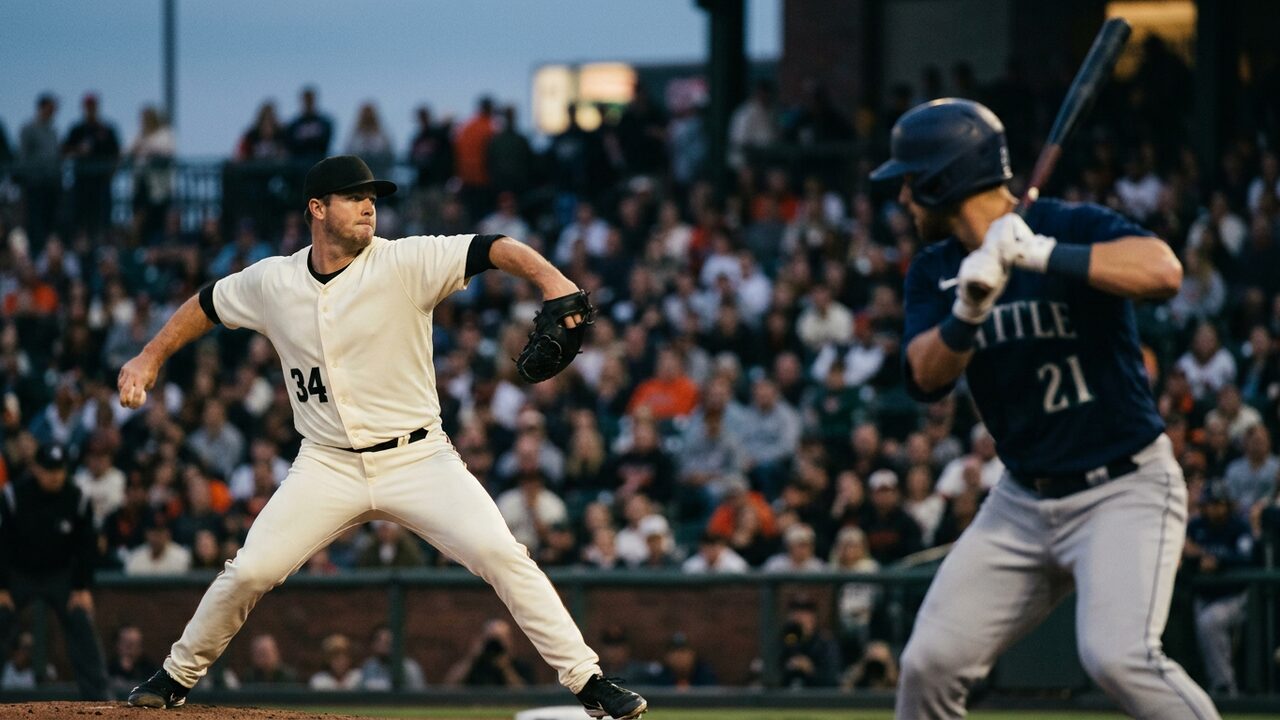
A sport made of one repeated contest
Baseball's structure is unusual: almost everything that happens begins as a contest between one pitcher and one hitter, repeated dozens of times a game and thousands of times a season. That repetition is why the sport rewards marginal advantages more than any other. An adjustment worth a fraction of a percentage point per pitch becomes a decisive edge over a full season.
It is also why baseball's analytics culture arrived first. When the same event happens often enough, patterns become measurable long before they become visible, and the side that measures first gets to act first.
The result has been a genuine arms race. Pitching found ways to be harder to hit; hitting responded by changing what it was trying to do with the ball; pitching responded again. None of it was cheating, and all of it changed the shape of the game.
What each side found
Pitching's discoveries were largely about velocity and movement, and crucially about how to preserve both. If a pitcher throws fewer innings, they can throw harder in the innings they do throw, so staffs were reorganised to hand hitters a succession of fresh, maximum-effort arms rather than one tiring starter. The batter who once got a fourth look at the same pitcher now sees three different ones.
Hitting's answer was to accept more strikeouts in exchange for damage. If contact is harder to make, make the contact that survives count: swings were redesigned to lift the ball, because a ball in the air can leave the park and a ball on the ground almost never does. That is the whole logic of the change, and it is sound.
Defence joined in by moving fielders to where the data said the ball would go, which removed hits that had been safe for a century. Every one of these steps was individually rational and collectively produced a game with more strikeouts, more home runs and less of everything in between.
Why the rulebook keeps intervening
A sport can survive an arms race; it cannot always survive what the arms race does to its rhythm. The recent wave of rule changes — limits on defensive positioning, a clock governing the pace between pitches, adjustments to the bases — are best understood not as punishments but as attempts to move the equilibrium back toward contact, movement and tempo.
That is a legitimate use of a rulebook and an old one. The pitching mound, the strike zone and the pitching rotation itself all exist in their current form because someone previously decided the balance had drifted too far in one direction.
What is unusual about the current round is how quickly the effects were visible, and how openly the reasoning was stated. The league said what it wanted the game to look like, then changed the rules until it looked more like that.
What to watch next
The arms race has not ended, because it cannot. Any equilibrium the rules create becomes the new environment that both sides optimise against, and the cycle restarts on a different axis. The interesting question is always which margin is being attacked next.
For the mechanics, Arena's MLB guides cover the rules and their recent revisions, the fielding positions and modern pitching staff, and the statistics that describe hitting and pitching value. They are written to be read in any order and they are the background this analysis assumes.