
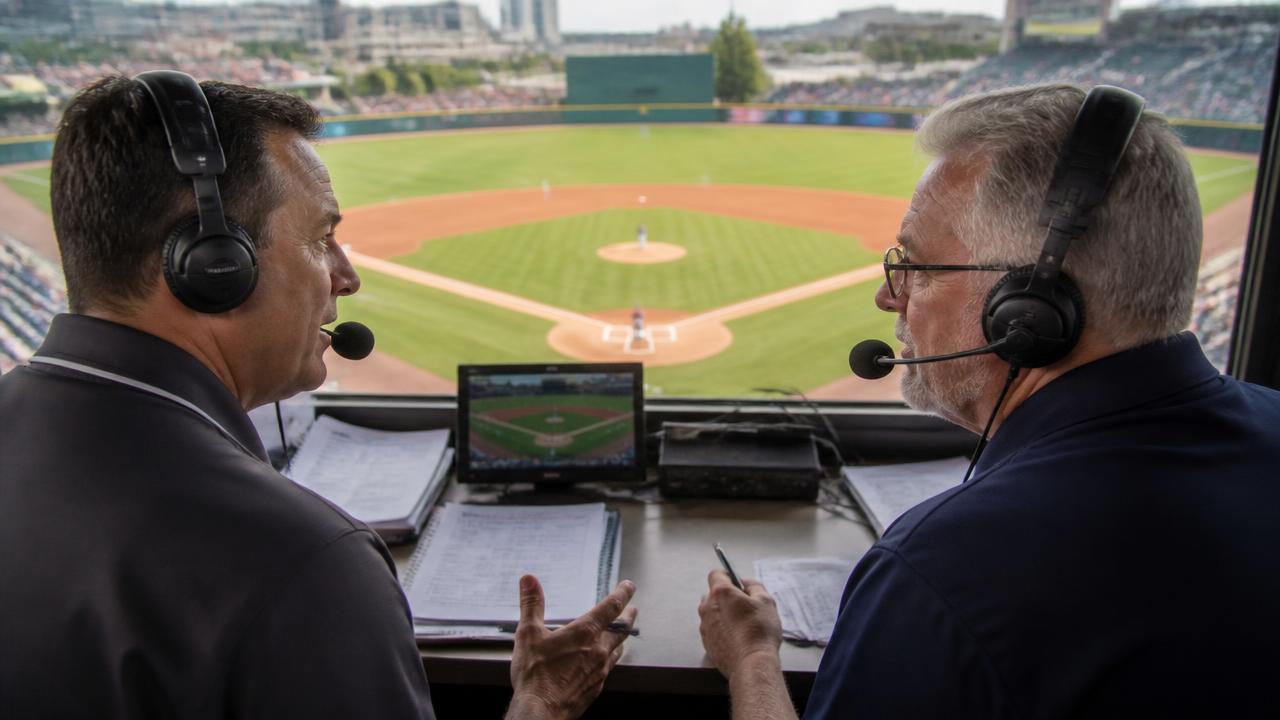
Room to talk, and room to be wrong
A sport with fewer sustained bursts of action gives its commentators far more airtime relative to the events themselves than a faster game does. That is an opportunity and a risk in equal measure: it lets a good broadcast build genuine context, and it lets a lazy one pad the silence with filler that outlives the moment it described.
I think this is underrated as a reason people attach so strongly to particular broadcast teams. The commentary is not incidental to the memory of a season; for a lot of viewers it is a large share of the memory itself.
Narrating texture, not just events
The best baseball commentary spends real time on what is not currently a highlight — a defensive alignment, a pitcher's pattern across the last three batters, the quiet logic behind a decision that will only matter two innings later. That is harder to do well than reacting to a home run, and it is the part of the job that actually teaches a viewer the sport.
It is also the part most vulnerable to being cut for time or replaced with chatter, which is a real loss even when the chatter itself is entertaining.
Respecting the silence
My own preference, for what it is worth, is for commentary willing to let a moment sit unnarrated occasionally rather than treating every pause as a gap to fill. Baseball has more of those pauses than most sports, and some of them are doing real work — building tension, letting a crowd's reaction land — that talking over them destroys.
None of this is a complaint about any particular booth. It is a case for treating broadcasting as part of the sport's craft rather than a neutral pipe the game happens to flow through, because the evidence of how much it shapes memory is everywhere once you start looking for it.