
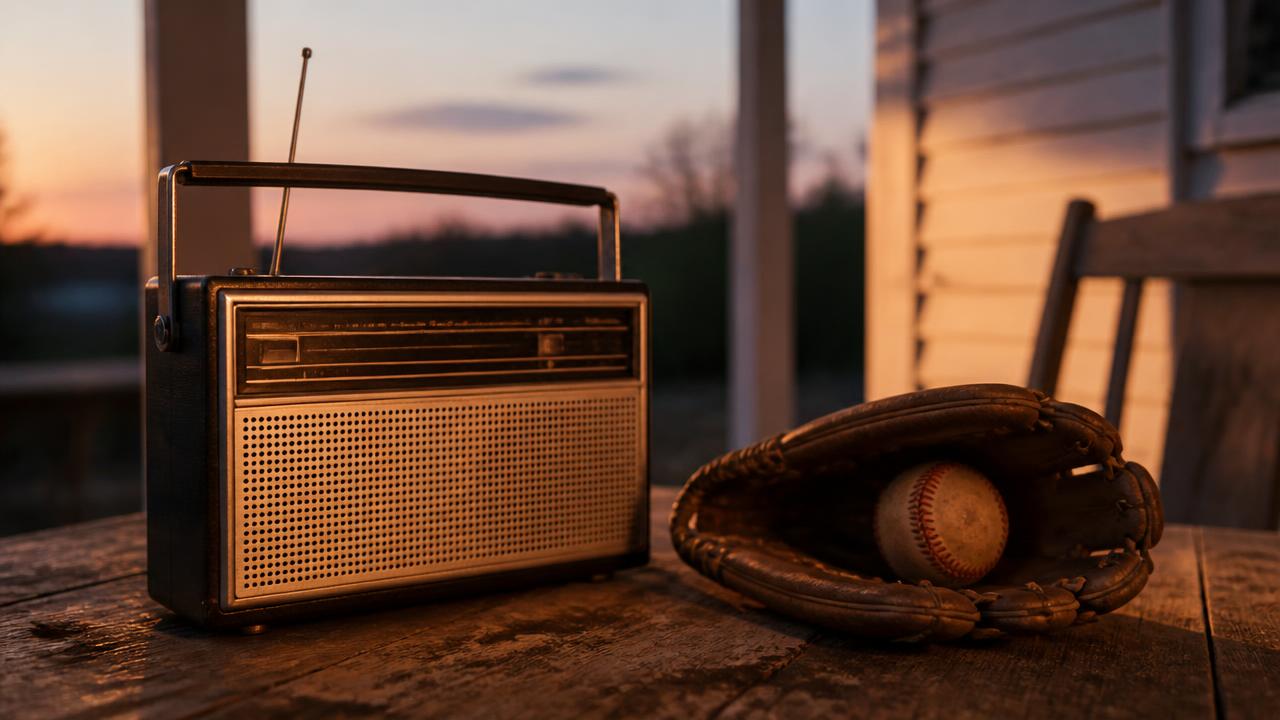
A sport built for description
Most sports lose too much without the picture — the geometry of a passing move, the shape of a formation. Baseball loses less, because its structure is sequential and countable in a way that lends itself to being described in words: the count, the runners, the pitch, the result. A good radio call can put you almost entirely inside a game you cannot see.
That is not a small thing. It means baseball can be followed properly while driving, cooking or working, in a way that few other sports can, and that has shaped how generations of fans actually consumed the sport.
A harder discipline than it looks
Radio commentary has to do work television commentary can skip, because the picture is doing none of the describing. A radio announcer has to communicate the defensive alignment, the count, the pace of the game and the mood of the stadium continuously, without ever assuming the listener can simply look and check.
Done well, this produces some of the most precise commentary in any sport, because sloppy description is immediately, audibly useless. Done poorly, it produces exactly the confusion you would expect from missing the picture and the words both.
What the habit says about the sport
I think the durability of baseball on the radio tells you something true about the sport's own self-image: it does not require your undivided visual attention to reward you, and it never really has. That is consistent with a schedule that plays nearly every day and a pace that leaves room to think.
It is a different proposition from appointment television, and I would not want baseball to abandon either mode. But the fact that one of them can be entirely audio, and still be complete, remains one of the more distinctive things about the sport.