The level change is a disguise
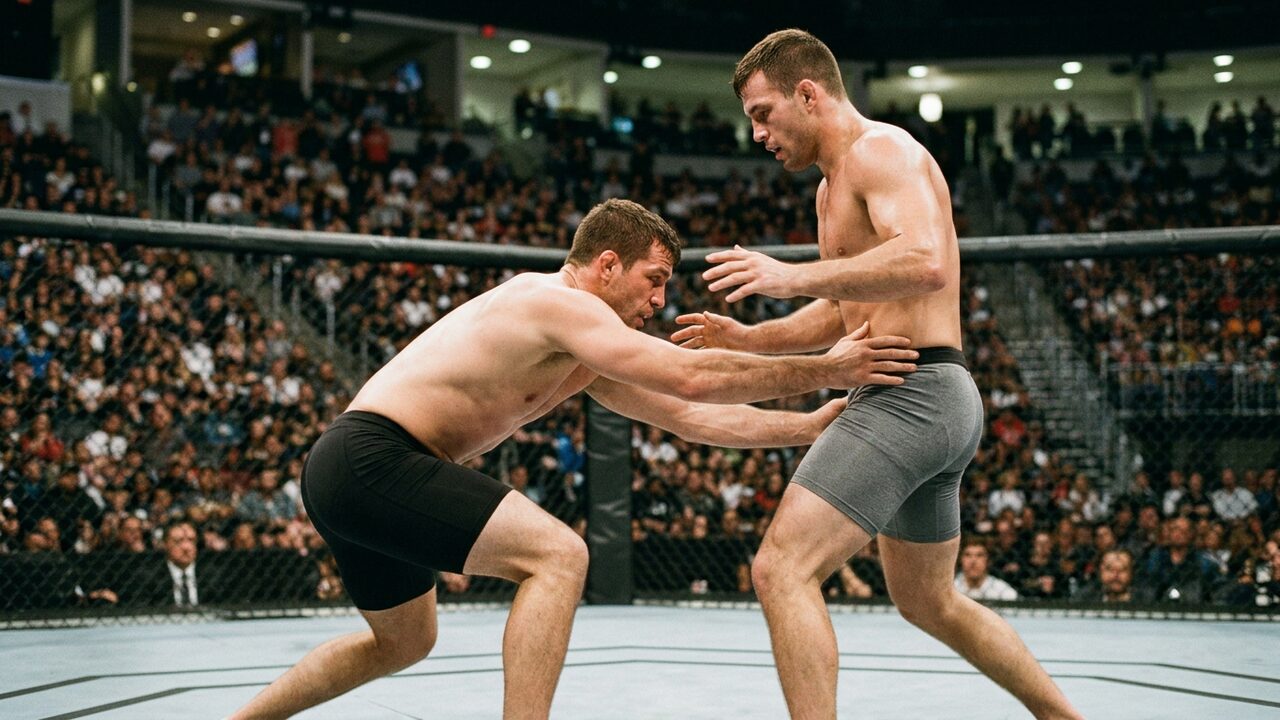
Before a double-leg is attempted, a wrestler bends the knees and drops the hips, which lowers the centre of gravity needed to drive through an opponent's legs. But the level change also disguises the takedown as the start of a body shot or a duck under a punch, meaning opponents who react only to obvious level changes get taken down by wrestlers who have trained the same motion to look identical every time, takedown or not.
Distance decides the race
Once the shot begins, it becomes a race between the attacker's penetration step closing distance and the defender's sprawl arriving to stop it. A shot taken from too far away gives the defender time to read it and sprawl cleanly; a shot taken from too close can be jammed before the legs are secured. Elite wrestlers manufacture the exact right distance beforehand rather than shooting from wherever they happen to be standing.
Earning the entry
Because a raw shot from range is easy to see coming, fighters use jabs, feints and level-change fakes to draw a reaction that opens the correct entry, then commit to the real shot once the opponent's weight or attention has shifted. This is why commentators talk about a takedown being set up over an exchange rather than in isolation; the shot itself is often the shortest part of the sequence.