
The unused takedown still works
A fighter with a credible wrestling background changes how an opponent strikes even if no takedown is attempted all fight, because the opponent has to keep a portion of attention on sprawling rather than committing fully to combinations. This is the same logic as a jab that never lands but still occupies range; the threat performs work independent of the outcome, which is why judges are taught to weigh attempted grappling exchanges rather than only completed ones.
Deciding where the fight happens
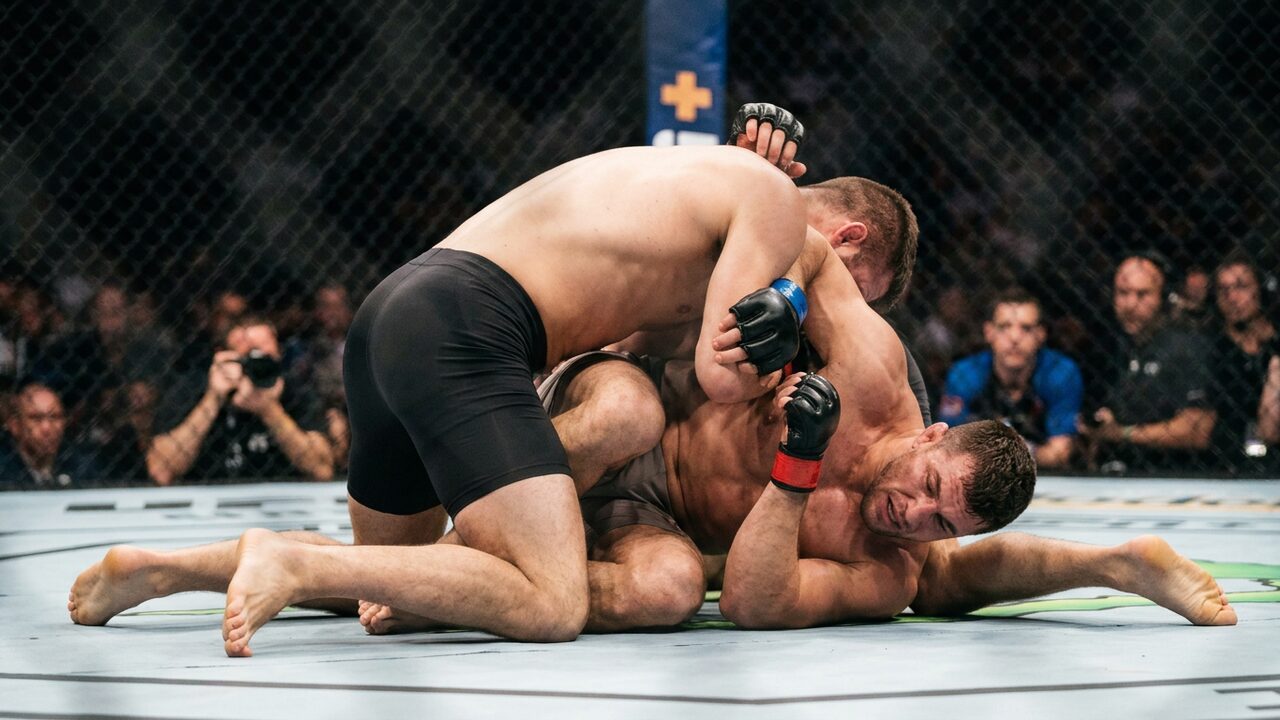
Good wrestlers do not use takedowns randomly; they use them to move a fight to the position where their opponent is weakest, whether that is the ground for a poor grappler or simply a clinch against the cage to slow down a faster striker. Control, in this sense, is really a decision about geography: which of the three ranges — striking distance, clinch, or ground — is being imposed on the other fighter.
Defence as offence
Because attempted takedowns count toward scoring even when stuffed, a fighter with excellent takedown defence is not merely surviving; they are actively denying their opponent a scoring avenue and forcing a striking exchange on the defender's terms instead. This is why wrestling coaches describe defence and offence in grappling as the same skill viewed from opposite ends, rather than two separate disciplines to be trained independently.