
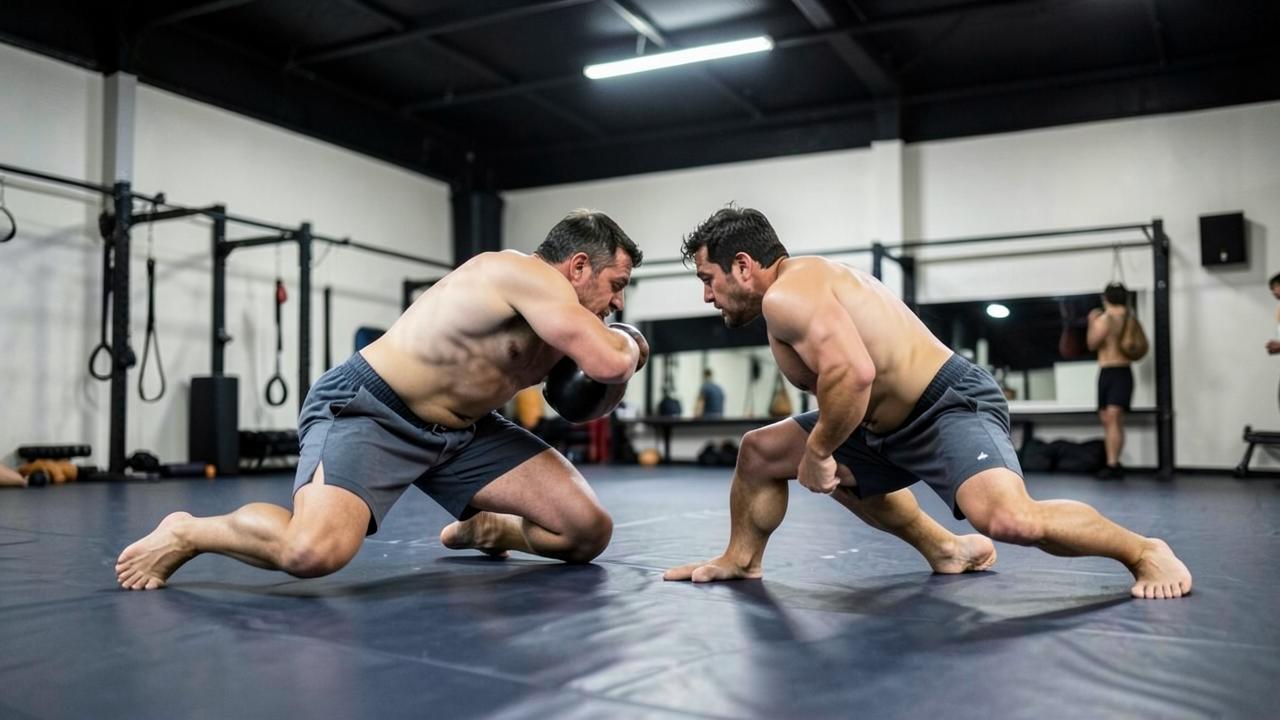
Why passing matters to judges
When a fighter passes an opponent's guard and reaches side control or mount, that transition is read as a clear sign of dominance, and it changes how the rest of the ground exchange is scored even before any strikes land. Guard retention is the skill of preventing exactly that transition, which means its success is measured by an absence of visible progress from the top fighter rather than by anything the bottom fighter produces themselves.
Hips before strength
Retaining guard against a stronger opponent depends far more on hip movement, angle and the use of frames against the opponent's hips and shoulders than on raw grip strength. Fighters with strong retention are constantly resetting their hips to face their opponent, using their legs to create distance and re-establish guard the instant it is threatened, rather than trying to physically hold a passing opponent in place.
Options stay open
A fighter who retains guard well keeps sweeps and submissions available for the whole round, because both depend on the bottom fighter's legs remaining connected to the opponent's body. Once guard is passed, those options largely disappear, which is why coaches treat retention as a precondition for offence from the bottom rather than as a separate, purely defensive category of skill.