
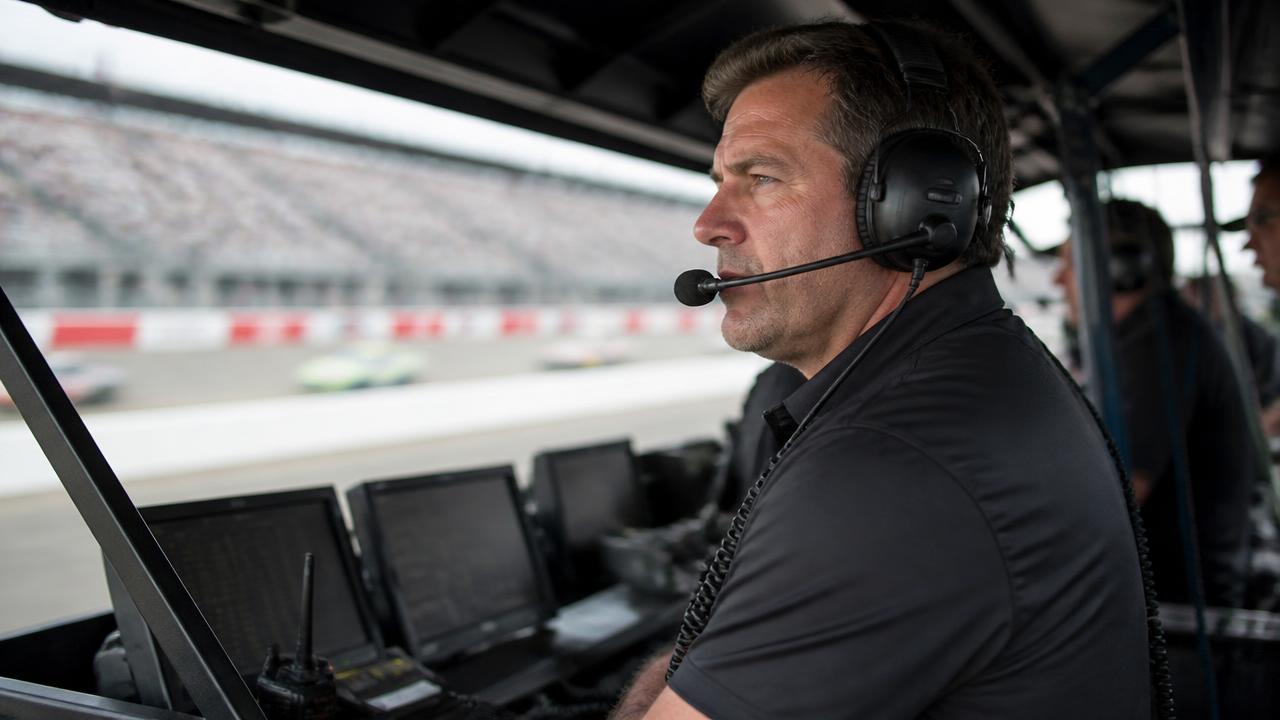
Translating complaints into changes
A driver reports sensations, not diagnoses. The chief's first job is translation: turning a description of how the car feels into a specific adjustment that can be made in a few seconds during a stop. Getting that translation wrong twice in a row can end a race, because there are only so many stops available.
Managing the person, not just the car
The second job is quieter. A frustrated driver overdrives, and an overdriven car destroys tyres. Much of what sounds like small talk on a radio is deliberate regulation: lowering the temperature, restating the plan, giving a driver something concrete to do so that frustration has somewhere to go. It is management under the tightest imaginable feedback loop.
Deciding without knowing
Every significant call is made before the information needed to make it is available. Whether the caution comes, whether the rain arrives, whether the rival stops. Good chiefs are not clairvoyant; they are unusually comfortable committing to a defensible choice and then adapting without relitigating it.