
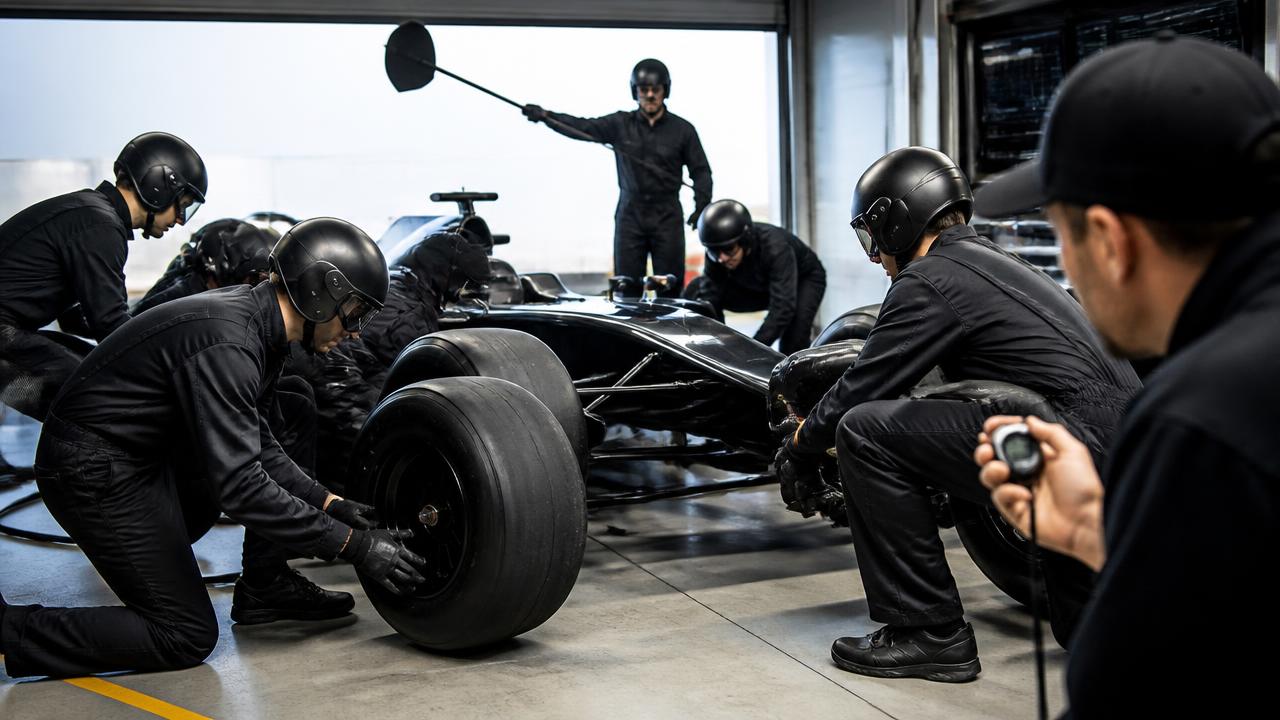
Rehearsal as insurance
A stop is performed under noise, heat and time pressure, which is precisely when conscious thought becomes unreliable. The answer is rehearsal until the sequence survives adrenaline. What looks like speed is mostly the absence of hesitation, and hesitation is what practice removes.
How stops go wrong
Catastrophic stops rarely come from someone being slow. They come from an order being broken: a wheel released before it is secure, a driver moving a fraction early, a tool handed to the wrong side. Procedure is the safety system, and the crews with the fewest disasters are usually the ones most rigid about sequence.
Why average beats best
A crew with one spectacular stop and one poor one has done worse than a crew with two solid ones, because the loss is larger than the gain. That asymmetry is why teams chase repeatability rather than records, and why the best crews look almost boring from the outside.