
The crew chief and the engineers
The crew chief is the closest thing the sport has to a manager: they set the car up, decide when to pit, choose how many tyres to take and judge how much fuel to risk. Engineers supply the modelling, but the call belongs to one person under time pressure with incomplete information, which is why the same car can have very different afternoons.
Because the cars are built to a tight specification, the setup window is narrow. Small choices about ride height, springs, tape and tyre pressures do most of the differentiating work, and the crew chief's feel for them is the team's real advantage.
The spotter
In a pack, a driver's visibility is poor. The spotter sits high above the track and narrates traffic — who is alongside, where the gap is, whether a crash ahead is clearing left or right. It is the only role in mainstream sport where one person's voice literally steers another at speed.
Trust between driver and spotter is a performance factor. A hesitant call costs a lane; a wrong call costs a car.
The crew over the wall, and the charter
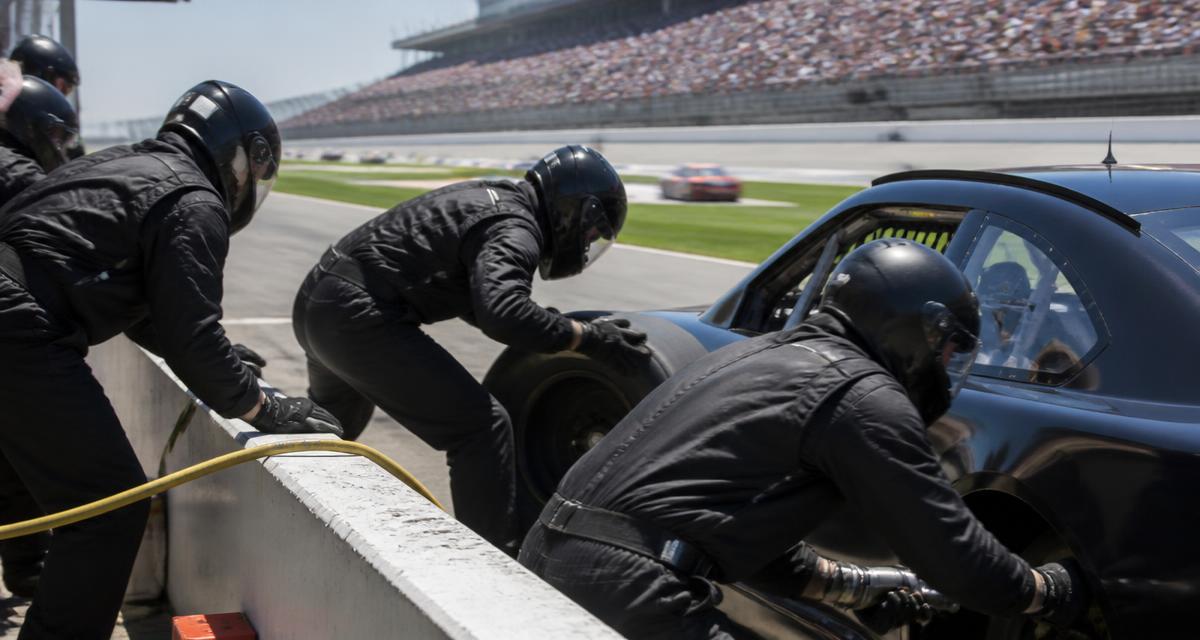
Pit crews are recruited and trained as athletes, because the difference between a good and an average stop is worth more track position than most on-track overtakes. A limited number of crew may go over the wall, so each has one job and rehearses it thousands of times.
Off the track, charters underpin the business: they guarantee a team's entry into races and carry commercial value, which makes them the closest equivalent the sport has to a franchise. Charter movement, not player transfers, is how teams change hands — which is why our trades pages stay empty rather than inventing roster moves.