
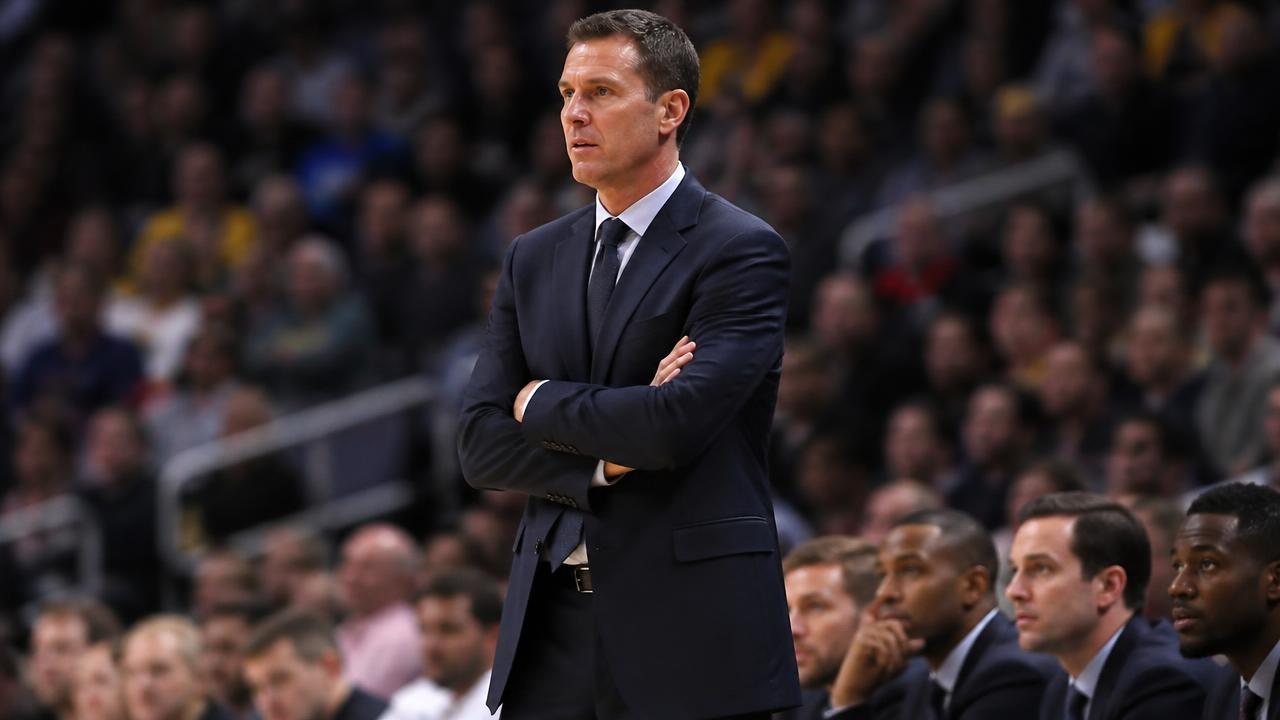
The play is rarely the point
Television isolates the huddle and the whiteboard, so viewers reasonably assume a coach's job is mostly design: draw the set, get the good shot. In practice a team runs the same handful of actions all season, and the opponent has scouted every one of them by October. What separates a good coaching staff from an average one is rarely a secret play nobody has seen before.
It is closer to habit-building. Which cut does a player make automatically when a defender does X. Where does the weak-side wing stand without being told. A team that has drilled those habits for months looks fluid even when the defense knows exactly what is coming, because the offense is not deciding in real time — it is reacting from memory, and memory is faster than a defense's recognition.
Attention is the resource being managed
A defense can only watch so much at once, and a coaching staff spends enormous effort deciding what to make it watch. A decoy screen that never gets used still occupies a defender's attention for a second, and a second is often the entire margin a possession needs. This is coaching as misdirection at the level of habit rather than trickery — nothing is hidden, it simply competes for a finite resource.
The same logic runs on the other bench. A defensive coordinator is deciding which of the opponent's habits to make more expensive, not inventing a new defense from scratch each night. Both sides are, in effect, fighting over where five tired human beings will choose to look for the next two seconds.
Why the timeout matters more than the diagram
A timeout stops the clock but its real function is often to interrupt a spiral — a run of plays where a team's attention has drifted toward panic or toward one matchup that isn't actually the problem. The words on the whiteboard matter less than the fact that thirty seconds of quiet gave ten players a chance to reset what they are looking at.
Judged this way, coaching stops being a mystery of secret sets and becomes something more ordinary and more demanding: the daily work of building habits that survive pressure, and the in-game work of redirecting attention before it locks onto the wrong thing. Neither shows up in a box score, which is exactly why it is underrated.