
Risk, not prophecy
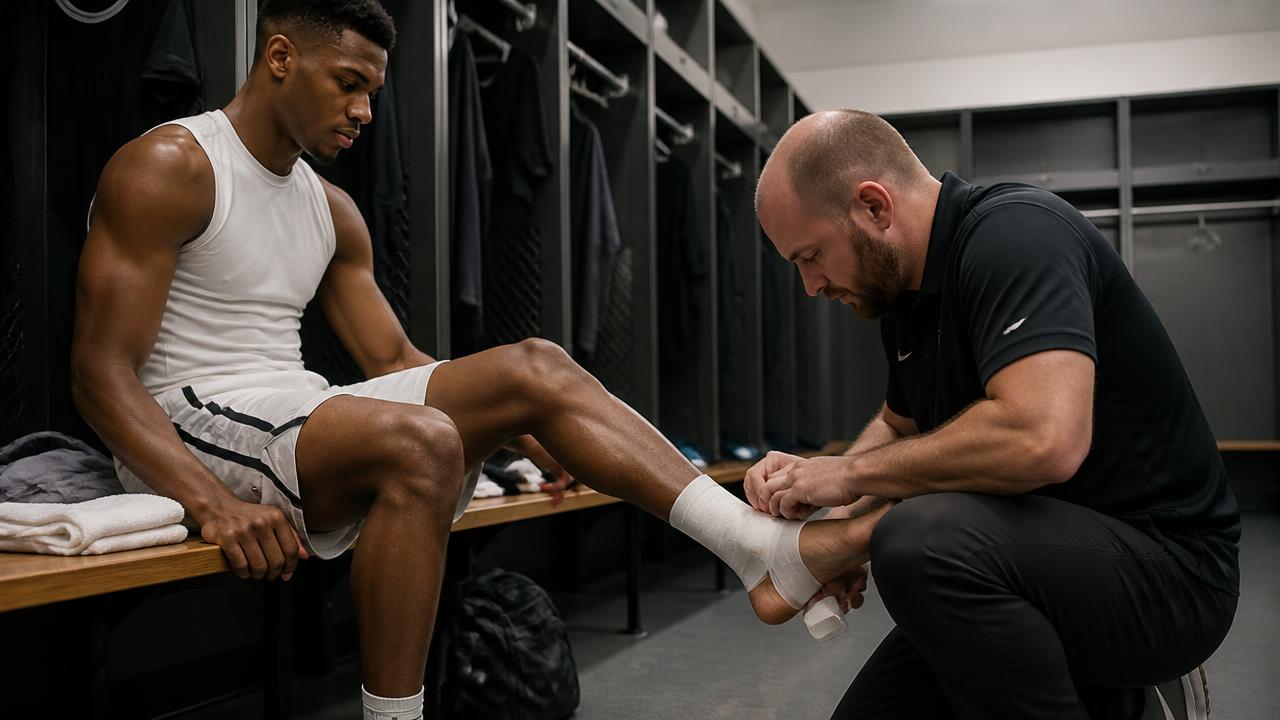
It is impossible to know in advance which player will be unavailable on a given night, and any specific claim to that effect should be treated with suspicion. What can be discussed responsibly, in general terms, is risk: workload across a long season, the physical demands of a given role, and recovery time between games all move the probability of injury up or down without ever determining a specific outcome.
This distinction matters because fans and analysts often reason backward from an outcome to a cause that feels satisfying — a heavy minutes total, an unusual travel schedule — when the honest position is that a probability shifted, and shifted probabilities produce different outcomes on different nights even with identical inputs.
Why bad luck cannot be fully managed away
Sports science has become considerably better at managing workload, tracking fatigue and building recovery protocols, and these measures genuinely reduce risk on average across a roster and a season. What they cannot do is eliminate randomness at the level of a single player on a single night, because a substantial share of injuries in any contact sport arise from an awkward but ordinary landing or collision that no amount of load management would have prevented.
This is a hard fact for organizations and fans alike to sit with, because it implies that some bad outcomes are not evidence of a mistake by anyone, simply the tail of a distribution that always existed. Judging a training staff or a coach purely by outcomes, rather than by the soundness of the process, tends to produce unfair conclusions in both directions.
Planning for a certainty made of uncertain parts
Front offices plan rosters as though injury will happen to someone, because across eighty-some games and a full roster it reliably does, even though it is impossible to say to whom or when. This is why depth, discussed elsewhere in Arena's roster construction analysis, is valued as insurance rather than luxury — it is a hedge against a category of risk that is certain in aggregate and unknowable in the individual case.
Understanding injuries this way — as a matter of probability and preparation rather than prediction or blame — is both more honest and more useful than searching for a single explanatory cause every time bad luck strikes a particular team.