
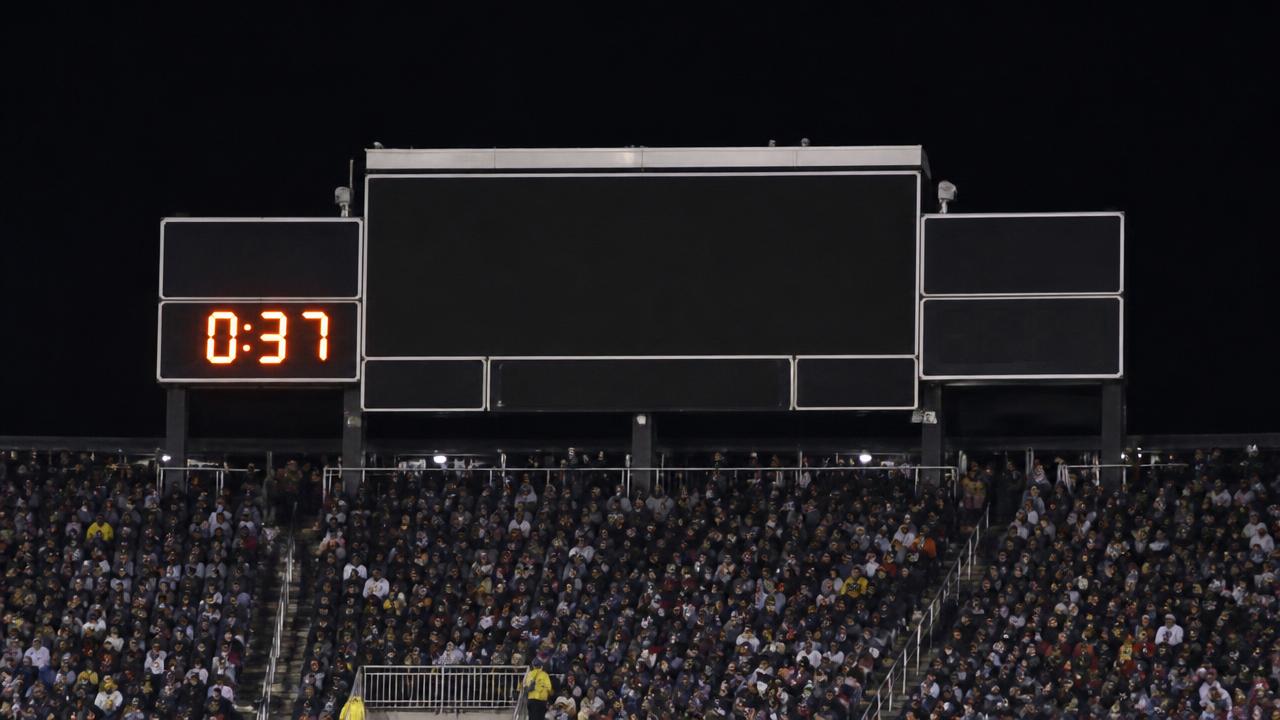
Timeouts are currency, not emergency buttons
A timeout stops the clock, which sounds like a minor convenience until the final minutes of a close game, when stopping the clock is often worth more than any single play call. Coaches who spend timeouts early to fix a personnel mismatch are trading a resource they may need later for a smaller gain now, and that trade is not always wrong — but it is always a trade.
The tension is sharpest for the trailing team on offence and the leading team on defence, who are pulling on the same clock in opposite directions. Every stoppage helps one side and costs the other, which is why savvy fans start watching the clock as closely as the down marker once a game tightens.
The two-minute warning changes the maths
Because the clock stops automatically at two minutes in each half regardless of timeouts remaining, the value of a timeout spent just before that point is lower than the value of the same timeout spent just after. Coaches who understand this hold their timeouts through the warning when they can, because the warning effectively gives them a stoppage for free.
This single rule reshapes a large share of late-game decision-making, and it explains behaviour that looks passive in the final three minutes of a half but is actually a coach declining to spend a resource the clock is about to hand over anyway.
Judge the decision, not the bounce
A clock decision is made with incomplete information about how the next several plays will unfold, and it should be judged against that uncertainty rather than against what happened afterward. A spike that preserves time for a play that then fails was still the right call if it maximised the chance of success at the moment it was made.
The habit worth building as a viewer is separating the two questions — was the decision reasonable given what was known, and did it work — because conflating them is how commentary ends up praising luck and punishing good process in the same breath. Arena's NFL rules guide explains the mechanics behind the two-minute warning and the game clock in full.