
Four downs, ten yards
Everything in American football descends from one rule: the attacking team has four attempts to advance the ball ten yards, and if it succeeds, it gets four more. That is the whole engine. A drive is a chain of these renewals, and a defence wins by breaking the chain rather than by taking the ball away.
Because the fourth attempt usually ends the drive if it fails, teams almost always use it to punt the ball downfield instead, conceding possession in exchange for field position. The decision to keep the ball on fourth down is the most-discussed judgement call in the sport, and the arithmetic behind it has shifted noticeably toward going for it as teams have got better at modelling the trade.
Field position matters more here than in most sports because a possession does not begin in a neutral place. Starting on your own ten-yard line and starting on the opponent's forty are so different in expected points that entire game plans are built around producing that gap.
Ways to score
A touchdown, worth six points, is scored by getting the ball into the opponent's end zone. It is followed by a conversion attempt: a kick worth one point from a short distance, or another play from closer in worth two. The two-point attempt is a live strategic choice rather than a novelty, and teams increasingly consult a chart rather than instinct.
A field goal, worth three, is kicked through the uprights and is usually attempted when a drive stalls within range. Its value is that it converts a failed drive into something, which is why the kicker's range quietly determines how aggressively a coach can call plays around midfield.
The safety, worth two points to the defending team, is the rarest score: it happens when the attacking team is tackled in its own end zone. It also hands the ball back, which makes it the single most damaging play available to an offence.
The clock and the penalties
The game clock stops for incomplete passes, for players going out of bounds, and after scores and penalties. That is why a sixty-minute game takes three hours and why the final two minutes of a half can contain more football than the preceding ten. A separate play clock forces the attack to start each play within a short window, which is what stops a leading team from simply standing still.
Managing these clocks is a distinct skill. A trailing team preserves time by throwing toward the sideline and by spending its limited timeouts; a leading team burns time by running the ball inside, where the clock keeps moving. Games are lost in this phase by coaches who are otherwise excellent.
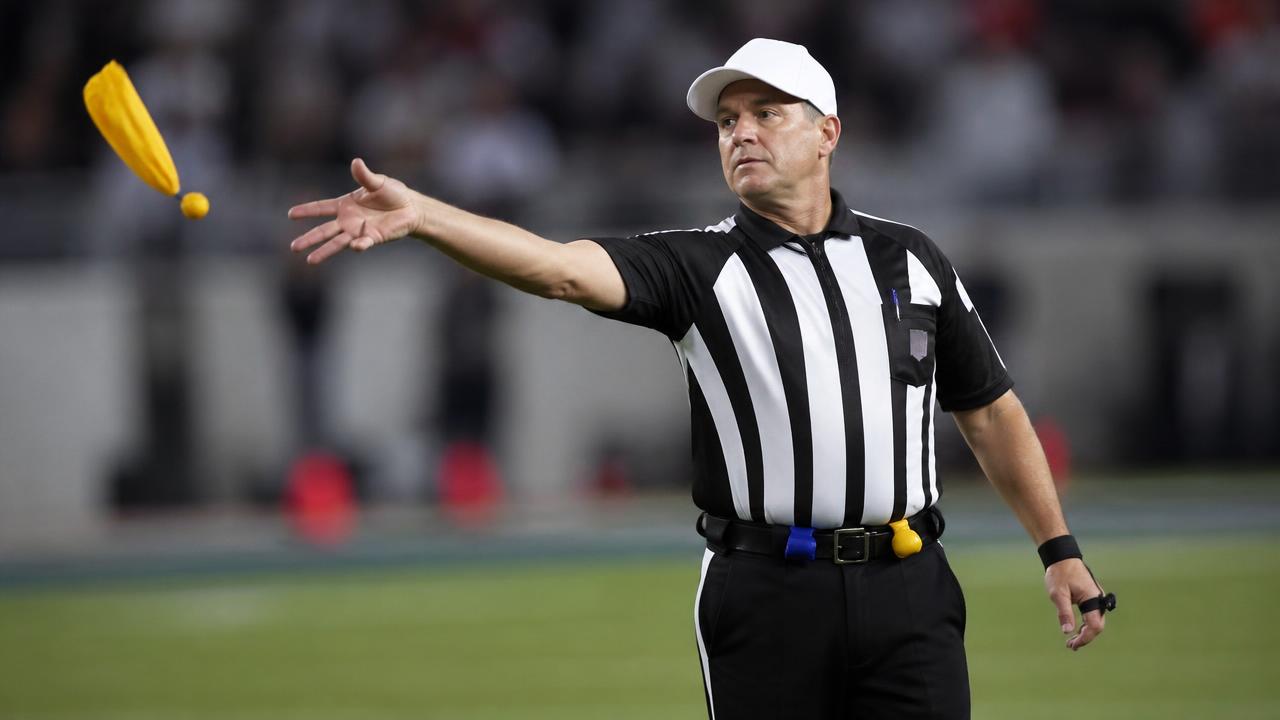
Penalties are enforced in yards, sometimes with an automatic renewal of downs. That combination makes some fouls disproportionately expensive: a defensive penalty on third down can hand the attack a fresh set of four attempts, which is worth far more than the yardage. Understanding which penalties carry a first down is most of what separates a casual viewer from an informed one.