
The offence
The quarterback receives the ball on nearly every play and decides what happens to it. No other position in team sport concentrates so much responsibility, which is why a team with a good one and nothing else can be competitive and a team with everything else and no quarterback usually is not.
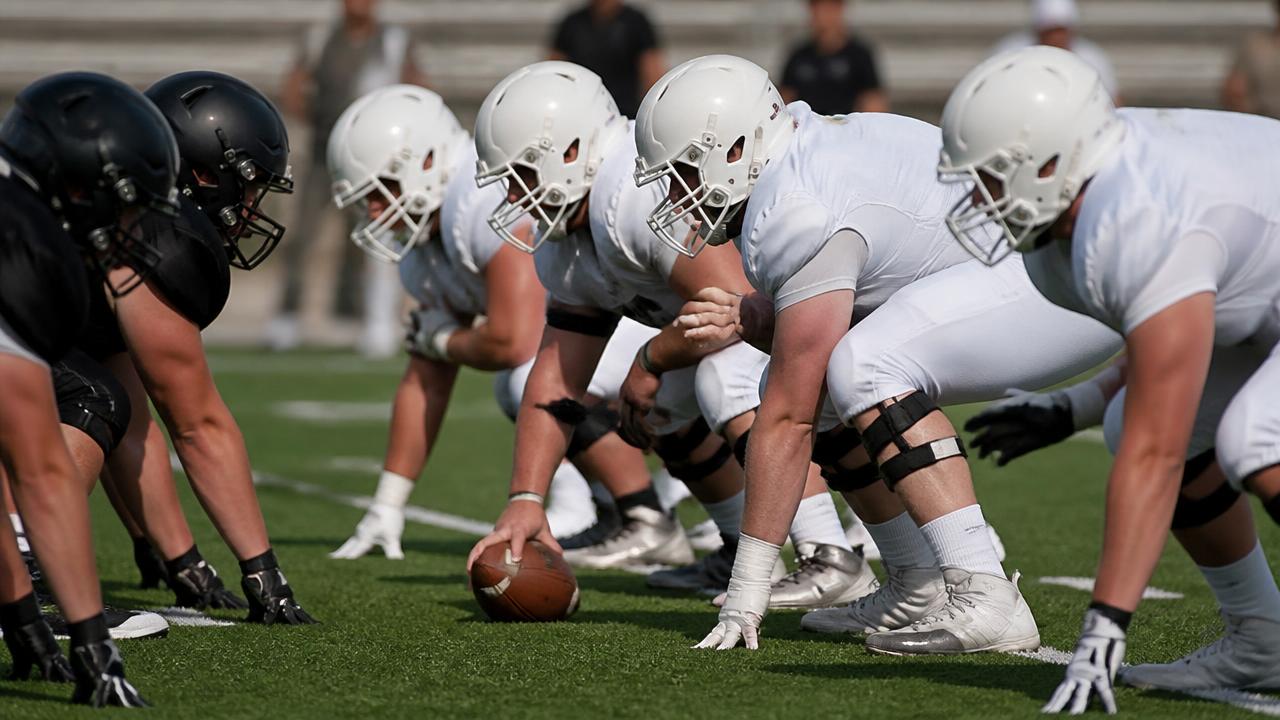
In front of him stand five offensive linemen whose job is to give him time and to open running lanes. They record almost no statistics, are noticed mainly when they fail, and comfortably decide more games than the players who get interviewed afterwards.
The skill players are the receivers, tight ends and running backs. Receivers stretch the field horizontally and vertically; tight ends are hybrids who both block and catch, which is what makes them so difficult to defend; running backs carry the ball and, increasingly, catch it out of the backfield.
The defence
The defensive line attacks the line of scrimmage, either pressuring the quarterback or closing running lanes. Behind them, linebackers are the flexible middle layer, responsible for tackling runners, dropping into pass coverage and disguising which of the two they intend to do.
The secondary — cornerbacks and safeties — covers receivers. Cornerbacks generally take a receiver each; safeties play deeper and are the last line, which means their errors are the most visible ones on the field.
Defences are described in shorthand by how many linemen and linebackers they use, but the more useful question is how many defensive backs are on the field. Against a passing attack, defences replace a linebacker with an extra defensive back so often that the substitution has become the default rather than the exception.
Specialists and personnel packages
Kickers, punters and long snappers do one job each, rarely, under enormous pressure. Their contribution is easy to undervalue until a season turns on a missed kick from a distance that looked routine.
The reason an NFL roster is so large is that these are genuinely different jobs, not variations of one. Almost nobody plays both ways, and the units substitute wholesale between plays.
Within a drive, both teams change personnel repeatedly based on down and distance. An offence that puts an extra tight end on the field is signalling a run, which invites a heavier defence, which is exactly the situation a play-action pass is designed to exploit. Watching the substitutions before the snap tells you most of what both coaches expect to happen.