
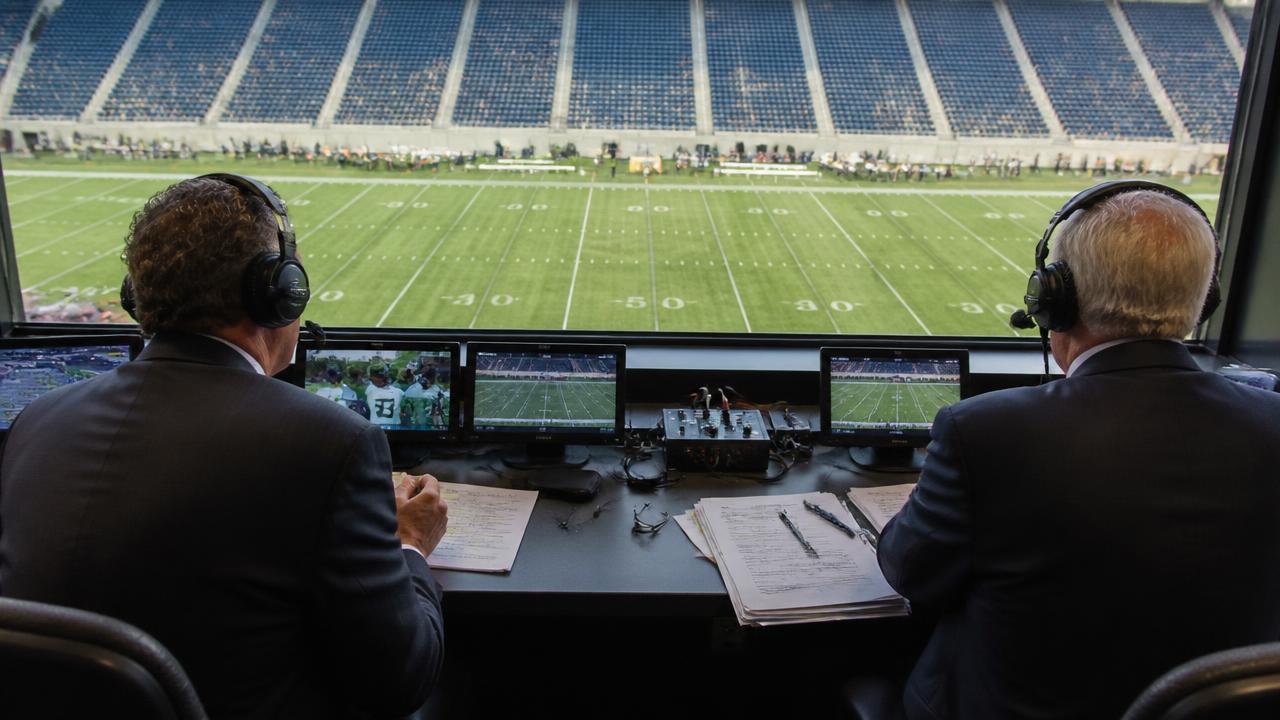
The camera cannot show you everything
The standard broadcast angle follows the ball and the players near it, which means the coverage shell behind the defensive line, the blocking scheme up front, and the receiver who was schemed open but not targeted are all happening just outside the frame on most plays. A viewer following only the main broadcast camera is seeing a curated slice of the field, not the whole of it.
This is not a flaw in production so much as a physical limit — no single camera can hold thirty yards of width and enough depth to be useful at broadcast resolution. It does mean that a great deal of what decides a play is structurally invisible to a casual viewer, regardless of how closely they are paying attention.
Replays are chosen, not neutral
When a producer selects which replay angle to show after a close play, that choice shapes the viewer's read of what happened, often before the commentary has said a word. A replay that shows a hand plainly out of bounds looks conclusive; a replay that shows an ambiguous angle looks debatable, and which one gets aired first frequently determines the public verdict before an official review even happens.
None of this implies bad faith. It is simply an editorial process happening at speed, under a broadcast deadline, and it has real influence over what a large audience believes it saw.
Commentary sets the storyline
A broadcast team decides, often in the days before kickoff, which storylines to emphasise — a rivalry angle, a redemption arc, a scheme matchup — and that emphasis shapes which moments get flagged as significant in the moment and which pass without comment. Two people watching the same game with different commentary can walk away remembering different games entirely.
None of this is a reason to distrust broadcasts; it is a reason to watch a little more critically, and to treat the picture on screen as one useful version of events rather than the whole of them. Arena's written analysis exists partly to fill in what the broadcast frame leaves out.