
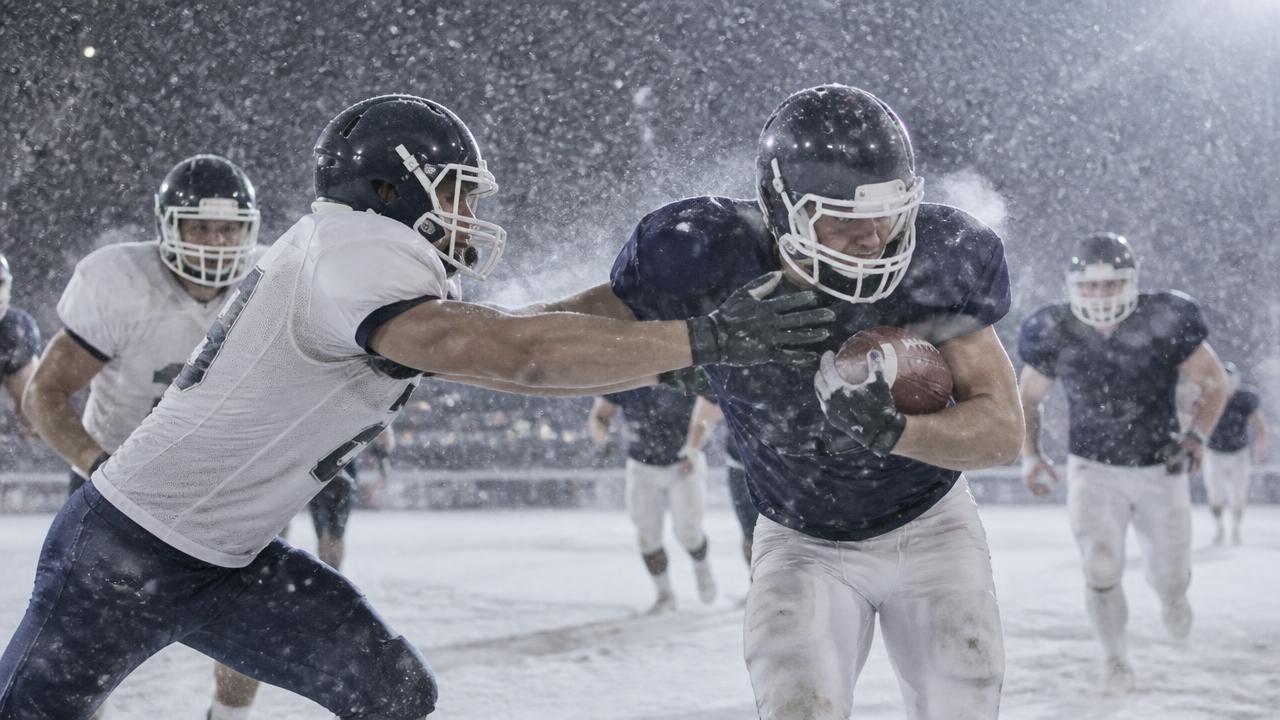
Wind is the real disruptor
Temperature gets the attention because it is dramatic on camera, but wind does more damage to a passing game. A crosswind at fifteen or twenty miles an hour is enough to push a deep throw off its intended line by a meaningful margin, and it affects a kicker's field-goal range even more, since a kicked ball spends longer in the air over a longer horizontal distance.
Coaches who have played in exposed stadiums learn to read the flags and the smoke from any nearby chimney as carefully as they read a scouting report, because a gust that shows up in the fourth quarter can turn a comfortable field-goal attempt into a low-percentage one.
Cold changes the ball and the ground
Low temperatures stiffen the football, making it harder to grip securely, which raises the chance of a fumble on contact and makes a receiver's job of securing a catch measurably harder. Gloves and sideline heaters mitigate some of this, but the ball itself behaves differently than it does on a warm afternoon.
The footing changes too. A frozen or frost-hardened field reduces traction for cuts and changes of direction, which affects receivers and defensive backs more than it affects a straight-ahead running play, subtly favouring power over finesse in the passing game's route concepts.
Why the run game gets called more
Given all of this, a heavier reliance on the running game in poor conditions is not nostalgia for a simpler style of football; it is a rational response to a passing game that has become less reliable and a kicking game that has become less accurate. The team that adjusts its play-calling to the conditions fastest often gains an edge that has nothing to do with talent.
It also explains why some franchises historically built rosters around power running and a strong defence — playing several games a year in genuinely harsh conditions rewards that identity more than a finesse passing attack. Arena's NFL rules and statistics guides are useful for tracking how these conditions show up in the numbers.