
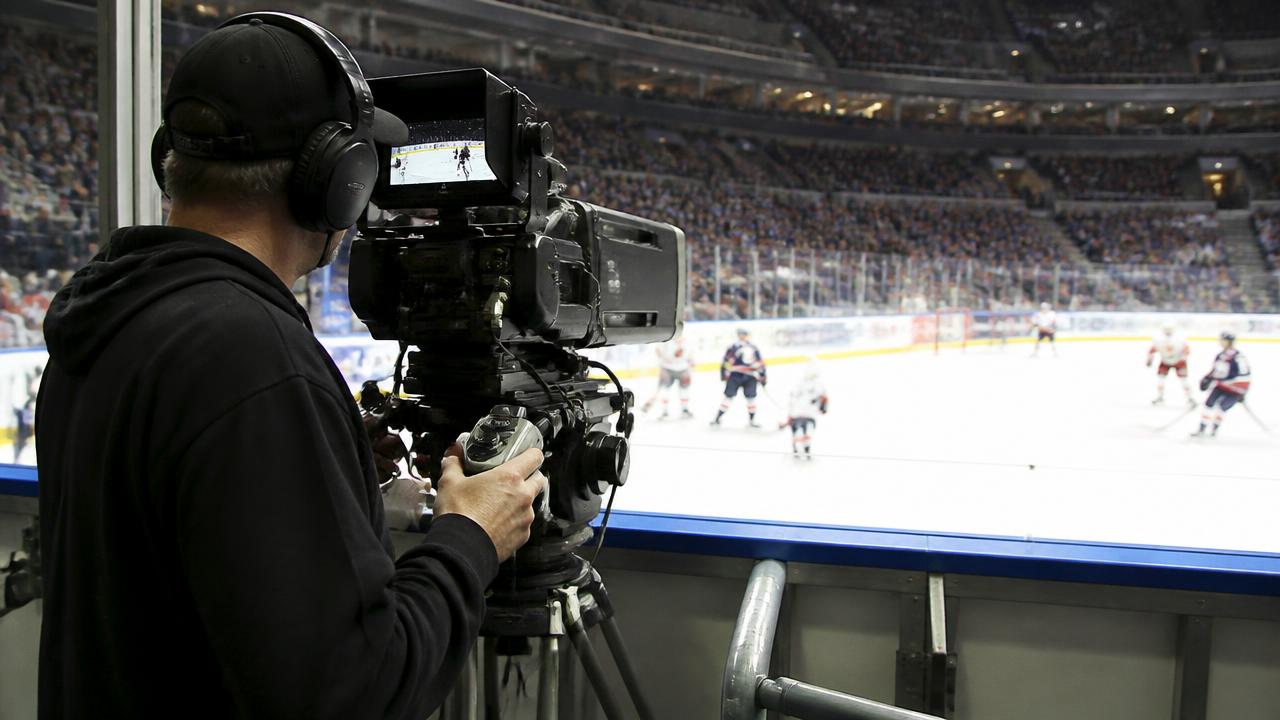
A hard object to broadcast
A puck is small, black against white ice, and moves faster than almost any other object regularly tracked on television. Producers have spent decades solving this with camera height, lens choice and lighting, because a broadcast that loses the puck for even a second loses the entire point of the coverage.
The wide, elevated main camera used across the sport is itself a compromise: high enough to show team shape and structure, but far enough back that the puck can vanish into the ice's glare without careful lighting design working constantly in the background to prevent it.
The tradeoff nobody escapes
A tighter shot shows individual battles and faces more clearly but loses the structural picture — who is open, where the numbers are, what the defence is conceding. A wider shot preserves that structure but makes it harder to feel the speed and physicality that make hockey compelling in person. Every broadcast is choosing a point on that spectrum, and different leagues and networks have chosen slightly different points.
Additional cameras — low-angle, net-mounted, overhead — exist specifically to borrow back what the main shot sacrifices, cutting in briefly to show what the wide angle cannot, without staying there long enough to lose the game's shape.
Success looks like nothing happening
The mark of a broadcast working well is that a viewer never consciously registers a camera cut, a graphic placement or a replay decision; attention stays entirely on the game. The moments viewers do notice production choices are almost always the moments something has gone wrong — a missed puck, an awkward angle, a replay that arrives too late to matter.
That invisibility is a genuinely difficult craft, refined over decades specifically for a sport that resists being filmed easily, and it is worth a moment's appreciation on nights when it simply, unremarkably, works.