
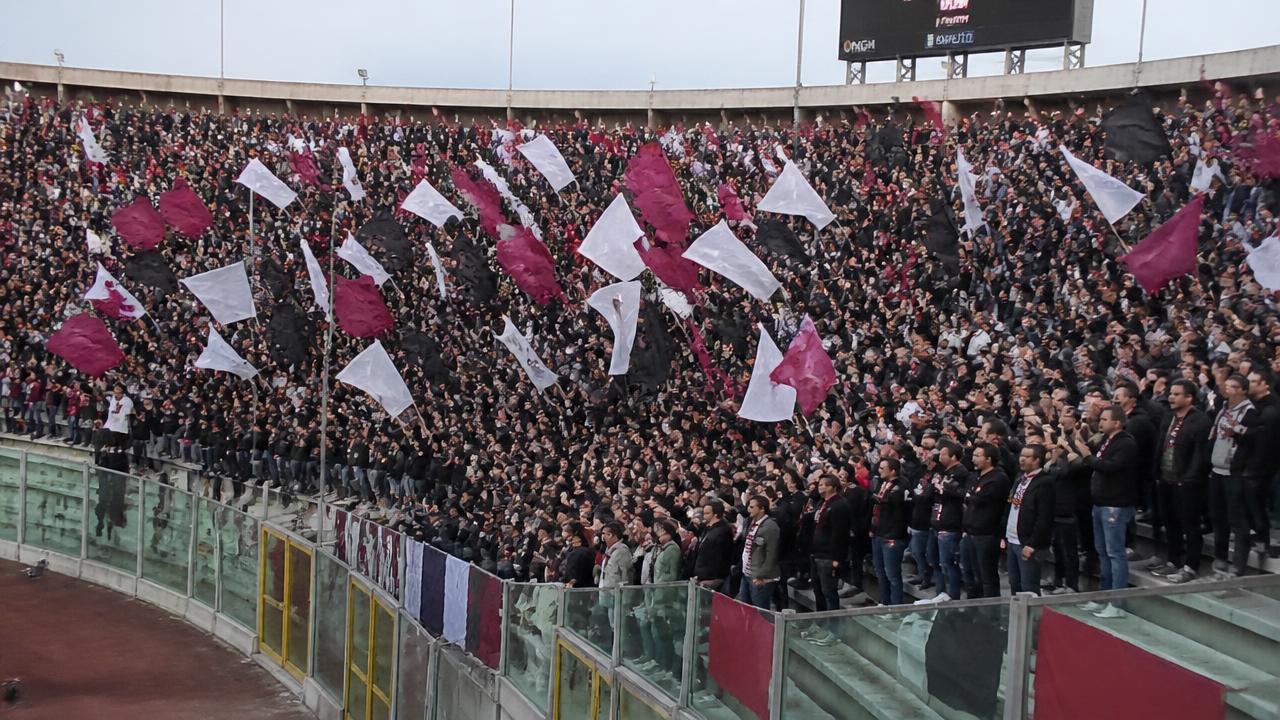
A stand with its own internal structure
In many Italian stadiums, the stand directly behind one goal, known as the curva for its curved shape, functions almost as a distinct institution within the club's broader supporter base, with its own recognised groups, informal leadership and long-running traditions that predate most of the players currently on the pitch. Standing in the curva is often understood by regulars as a specific commitment, involving standing for the full match, singing continuously and participating in coordinated displays, distinct from simply attending as a spectator elsewhere in the ground.
This internal organisation gives the curva a coherence and intensity that is difficult to replicate through purely spontaneous crowd behaviour. Chants and songs are led, sustained and coordinated by recognised voices within the group, producing a sound and atmosphere that depends on organisation as much as raw enthusiasm.
The planning behind a single display
The large coordinated visual displays sometimes seen unveiled before kick-off, involving thousands of coloured cards or a giant banner covering an entire stand, require extensive planning that begins weeks or months before matchday itself. Groups within the curva coordinate design, materials and distribution logistics well in advance, treating the display as a serious collective project rather than a spontaneous gesture, often timed to mark a significant anniversary or occasion in the club's history.
This level of organisation reflects genuine institutional continuity within these supporter groups, who often maintain records, traditions and hierarchies passed down across generations of members, independent of the club's own official structures. In this sense the curva is not simply a part of the crowd; it is closer to a parallel organisation with its own internal culture running alongside the club itself.
A culture that also generates real tension
This same organisation and independence has also, at various points, generated tension between supporter groups and club or league authorities, particularly around questions of influence, conduct and accountability within a structure that operates with real autonomy from official oversight. Clubs have had to navigate a genuinely difficult balance between respecting a supporter culture that predates current ownership and management by decades, and maintaining standards of conduct expected of any modern sporting institution.
That tension does not have a simple resolution, and different clubs have approached it differently over the years. What is consistent across Italian football generally is an acknowledgement that the curva represents something more structurally significant than an enthusiastic section of a crowd, a genuinely organised subculture with its own history, its own internal politics and its own claim to a meaningful stake in what a football club represents to the community around it.