
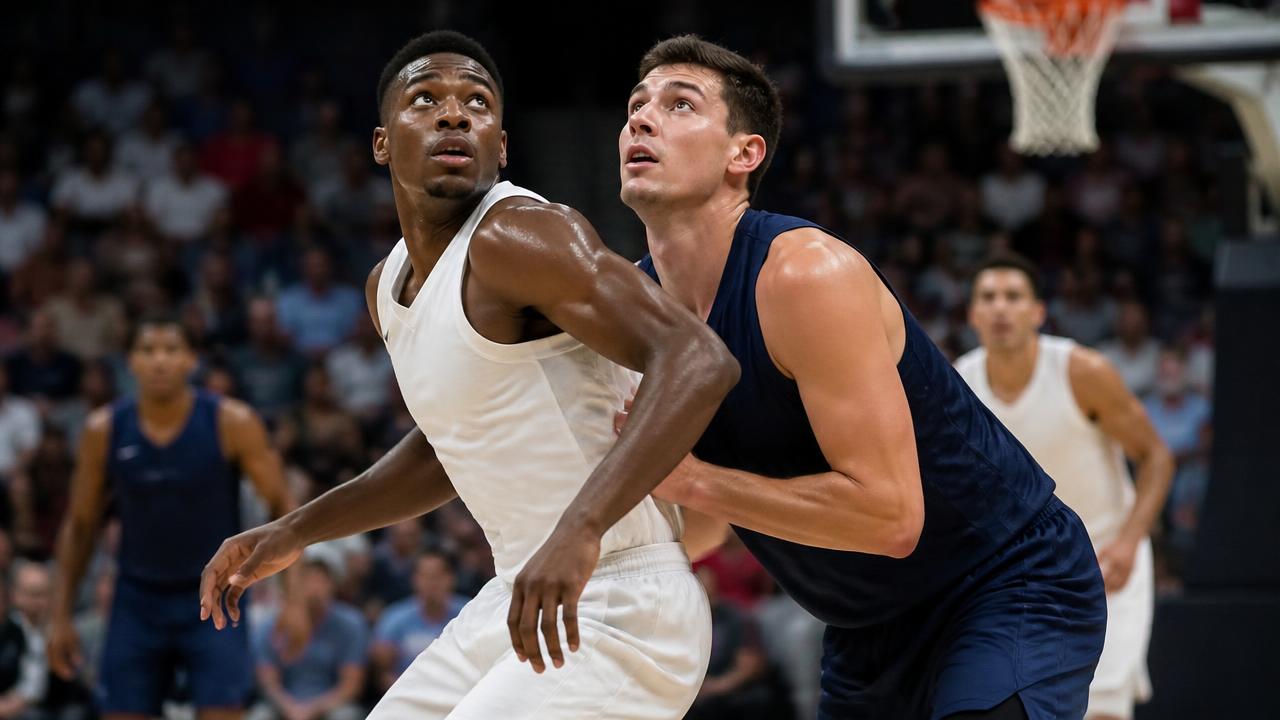
The contest happens before the shot lands
A rebound looks like a contest for a ball in the air, but the meaningful contest is for a patch of floor, and it is usually settled the moment a shot goes up. A player who has already established a body angle between an opponent and the basket has won most of the battle before either of them leaves the ground, because the opponent now has to travel around a body rather than simply outjump it.
This is why smaller, less explosive players can be excellent rebounders and why some highly athletic players are not. Leaping ability decides contests that are already close. Positioning decides which contests are close in the first place, and positioning is a habit that can be coached and repeated on every single shot, unlike a vertical leap.
Reading the carom is its own skill
Long rebounds and short rebounds are not random; a shot's arc, spin and the angle it strikes the rim push the ball in directions that are predictable to a trained eye. Players who track shots well over years develop something close to instinct for where a given miss will land, and they are already moving there while a less experienced teammate is still watching the flight of the ball.
This is one reason veteran rebounders often outperform what their physical measurements would predict. They have simply seen more misses from more angles, and pattern recognition compounds the same way it does in any other skill.
Crashing the glass is a trade, not a bonus
Sending extra players to the offensive boards increases the chance of a second-chance shot, but every player who crashes is a player who is not already retreating on defense. If the shot is missed and the rebound lost, the defense is now facing a fast break with fewer bodies back — a cost that never appears next to the offensive rebounding number itself.
The teams that crash intelligently are making that trade selectively: sending size when the shot is far from the rim and the carom is likely to be long, holding players back when the shot is a quick one that leaves no time to recover. Watching that selection is a better way to judge a coaching staff's rebounding rules than watching who jumps highest.