
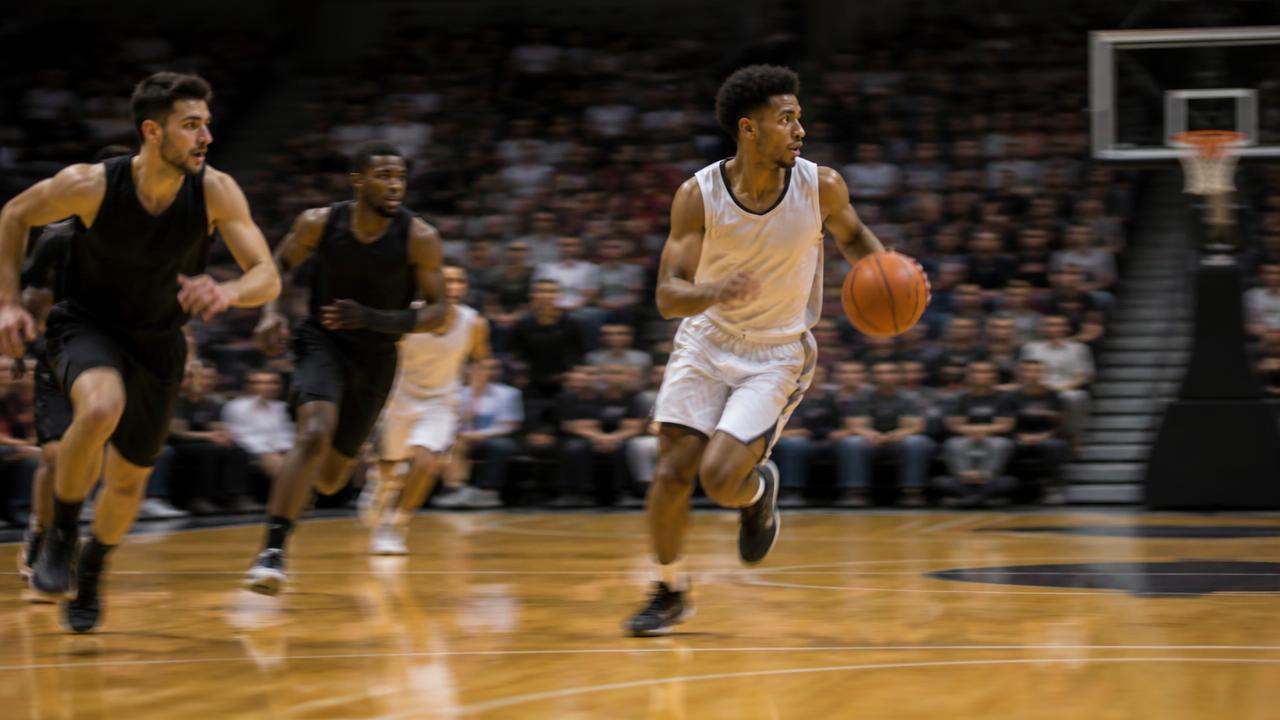
The break is downstream of the defensive stop
It is tempting to think of transition offense as a separate phase of the game, arriving after a steal or a spectacular sequence. In reality the great majority of fast breaks begin with an ordinary defensive rebound, and the quality of the break is set by decisions made in the previous ten seconds — how the defense rotated, whether a rebounder secured the ball cleanly, and how quickly an outlet pass found a player already facing the open floor.
A team that wants to run therefore spends practice time on defensive rebounding and outlet mechanics far more than on the sprint itself. Speed is only useful once the ball is live and moving in the right direction, and both of those conditions are earned on defense.
Numbers are a floor-balance problem
A break with a numerical advantage — three offensive players against two defenders, say — is worth pursuing aggressively. A break that levels out to matched numbers is usually better walked into a normal offensive set, because forcing a shot into an even defense sacrifices the following possession's rebounding position for very little gain.
Getting numbers in the first place depends on how many defenders were already retreating before the rebound was even secured, which loops back to a team's floor balance during its own offensive possession. A team that sends too many players to the offensive glass, as discussed elsewhere in Arena's rebounding analysis, is trading away exactly the numbers advantage transition offense depends on.
Pace is a risk decision, not a personality
Running is often described as though it were a style choice tied to a team's identity, but it is more usefully understood as a running risk calculation performed possession by possession. A fast shot is a lower-percentage, quicker attempt that denies the opponent time to set a defense; a slow possession is a higher-percentage attempt that gives the opponent time to set up but also to substitute and rest.
Teams that run well are not simply fast. They are accurate about when running is the better bet and disciplined enough to decline the break when it is not, which is a harder skill to develop than speed and a much harder one to coach out of a roster that has learned to run indiscriminately.