
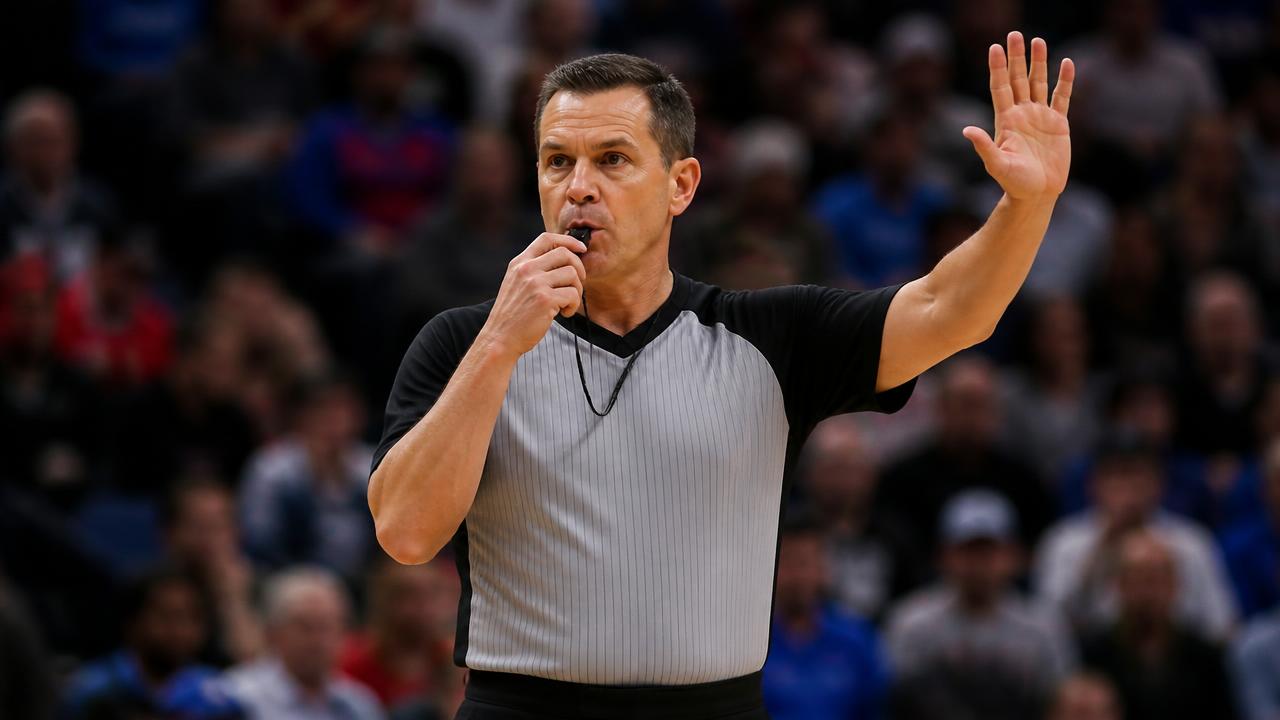
Advantage, not contact, is the standard
A common source of frustration is the sense that contact goes uncalled inconsistently, but the rulebook itself is built around a different question than fans often assume. Modern officiating philosophy asks whether contact affected a player's ability to complete a normal basketball move, not whether contact happened at all. Two nearly identical touches can be officiated differently because one player was already off balance for reasons unrelated to the contact and one was not.
This standard is defensible in principle — incidental contact is a constant feature of a sport played by large people moving quickly in a confined space, and calling all of it would turn the game into a free-throw exhibition. It is also, unavoidably, a judgment call, which is where most of the argument actually lives.
Game management is a real principle
Referees are also managing the flow and temperature of a contest, a job that is rarely stated openly but is visible in patterns: fewer marginal fouls called in the last two minutes, a tendency to let physical play continue if both teams are matching it. This is not corruption. It reflects a considered view that a game decided by a marginal whistle in crunch time is worse for the sport than a game allowed to be played through, and referees are trained with that trade-off in mind.
Fans of the team on the wrong end of a particular non-call rarely credit the principle, which is a predictable and reasonable reaction, but it is worth separating genuine inconsistency from a coherent, if debatable, policy applied as designed.
Why consistency is structurally hard
A referee has a fraction of a second, one physical vantage point, and a play involving several bodies whose intentions are not visible from the floor. Slow-motion replay from multiple angles, available to every viewer at home, simply was not available to the person making the call, and that gap will never fully close no matter how much technology assists after the fact.
None of this means officiating cannot improve, and replay review exists precisely because some errors are worth the stoppage to fix. But it does mean that a certain rate of disagreement is built into the format rather than being a sign of bad faith, and it is worth judging officiating against that realistic baseline rather than an unreachable one.