
Noise is a defensive variable
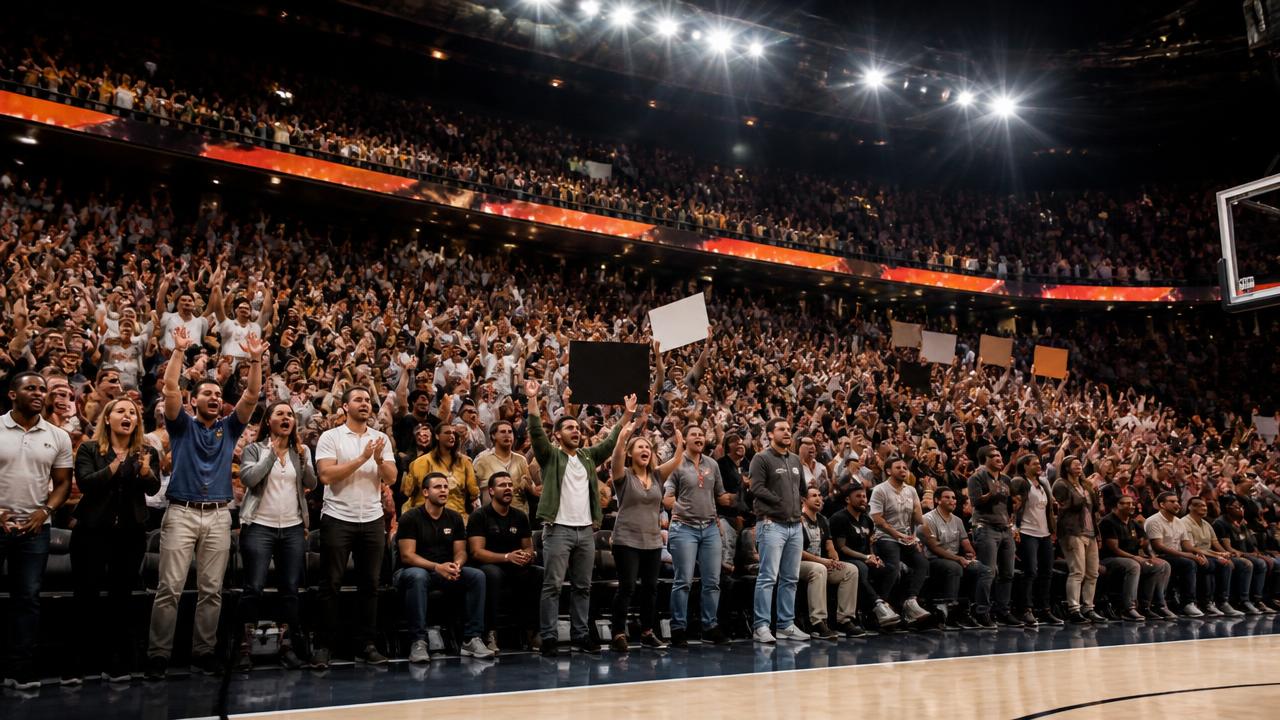
Defense in basketball depends heavily on verbal communication — calling out a screen, a switch, a cutter — and a loud building makes that communication genuinely harder, not just uncomfortable. A visiting defense that cannot hear its own calls will make more of the small miscommunication errors that turn into open shots, and this effect is measurable enough that road defensive execution reliably dips in the league's loudest venues.
This is a real competitive factor rather than an atmospheric nicety, which is why home teams cultivate crowd noise deliberately — timed video prompts, music cues before a defensive possession — as an actual part of their gameplan rather than pure entertainment between whistles.
The building itself has an opinion
Shooters talk about backgrounds and sightlines because they matter: the colour of the seating behind the basket, the height of the scoreboard, the consistency of lighting across an arena all affect how comfortable a shooter feels picking up the ball's flight against the backdrop. Visiting players spend part of their pregame routine adjusting to a building precisely because these small variables are not identical from arena to arena.
Floor surfaces, rim tension and even the quality of air circulation are also maintained to a league standard but not to identical feel, and veteran players will mention specific buildings where shots simply seem to behave differently, a claim that is hard to quantify but consistent enough across careers to take seriously.
A feedback loop, not a one-way push
The relationship between crowd and players runs both directions. A crowd reacts to a run started by the home team, gets louder, and that noise genuinely raises the energy of the players on the floor, who then extend the run, which raises the crowd further still. This loop is why runs in basketball often escalate faster than the underlying talent gap would predict, and why a single defensive stop in the right moment can feel disproportionately large.
It also explains why playing on the road against a struggling team can still be dangerous: a building does not need a team in form to get loud, it only needs a moment worth reacting to, and the loop can start from almost nothing once it is given a spark.