
What is actually being protected
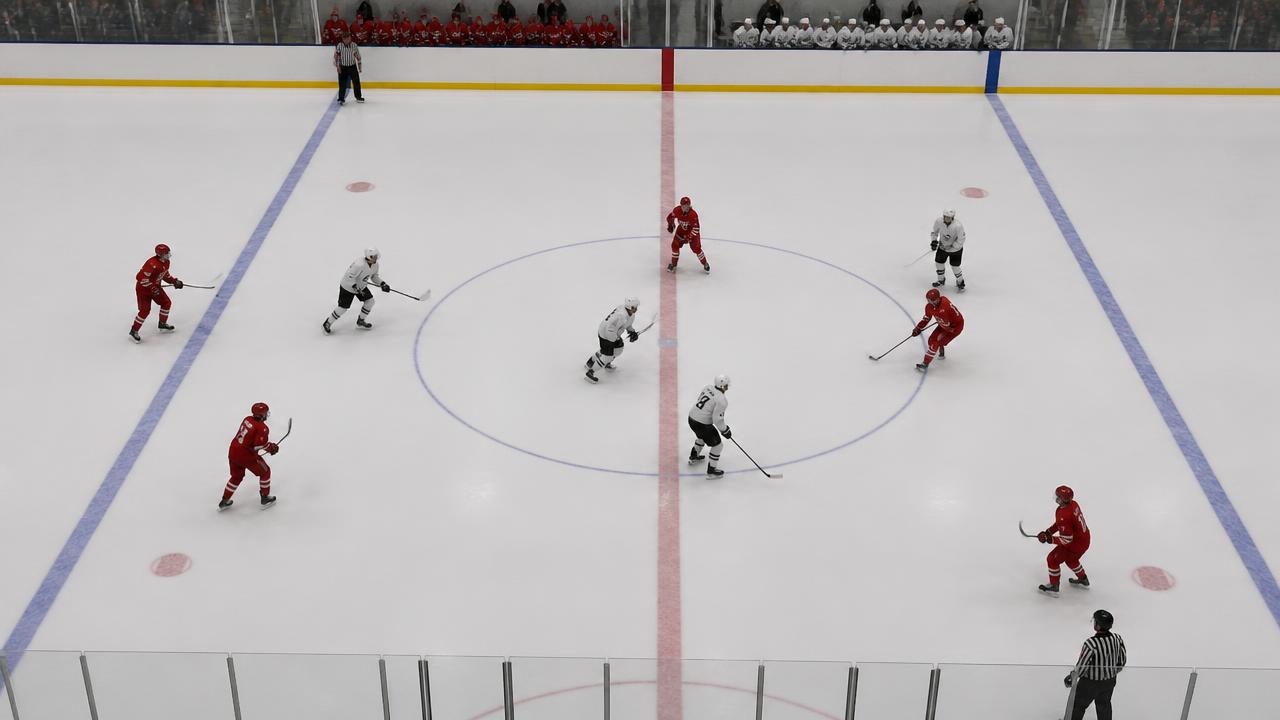
A trap concedes the offensive blue line almost willingly and instead packs the neutral zone, daring the opposing team to carry the puck through a crowd rather than around it. The point is not to prevent entry outright; it is to make every entry happen through the one lane the defending team has chosen to defend hardest.
That choice trades offence for control. A team running a trap is rarely generating much of its own pressure, because the forwards who might otherwise attack are occupied holding the neutral zone shape instead.
Time, not turnovers, is the currency
The trap rarely produces the puck immediately. What it produces is delay — a carrier forced to slow down, reroute, or dump the puck into a zone he did not want to enter yet. Over a period that delay reduces the total number of clean attacking-zone possessions the other team gets, which is a quieter way of winning a game than most fans want to watch.
This is also why trap-heavy eras produce lower-scoring hockey league-wide: the system does not need to be dominant on any single play to lower the overall rate of chances, it only needs to be present.
How it gets broken
Speed alone does not beat a well-organised trap, because the defending team is not trying to win a race, it is trying to clog a lane. What beats it is width — spreading attackers so the neutral zone has more space to defend than five players can actually cover — combined with the patience to regroup and try again rather than forcing a bad entry.
This is why puck-moving defencemen matter so much against a trap. A defence pair that can reverse the puck and attack from the other side turns the neutral zone into a wider problem than the trapping team wants to solve, and eventually a lane opens that a diagram alone cannot close.