
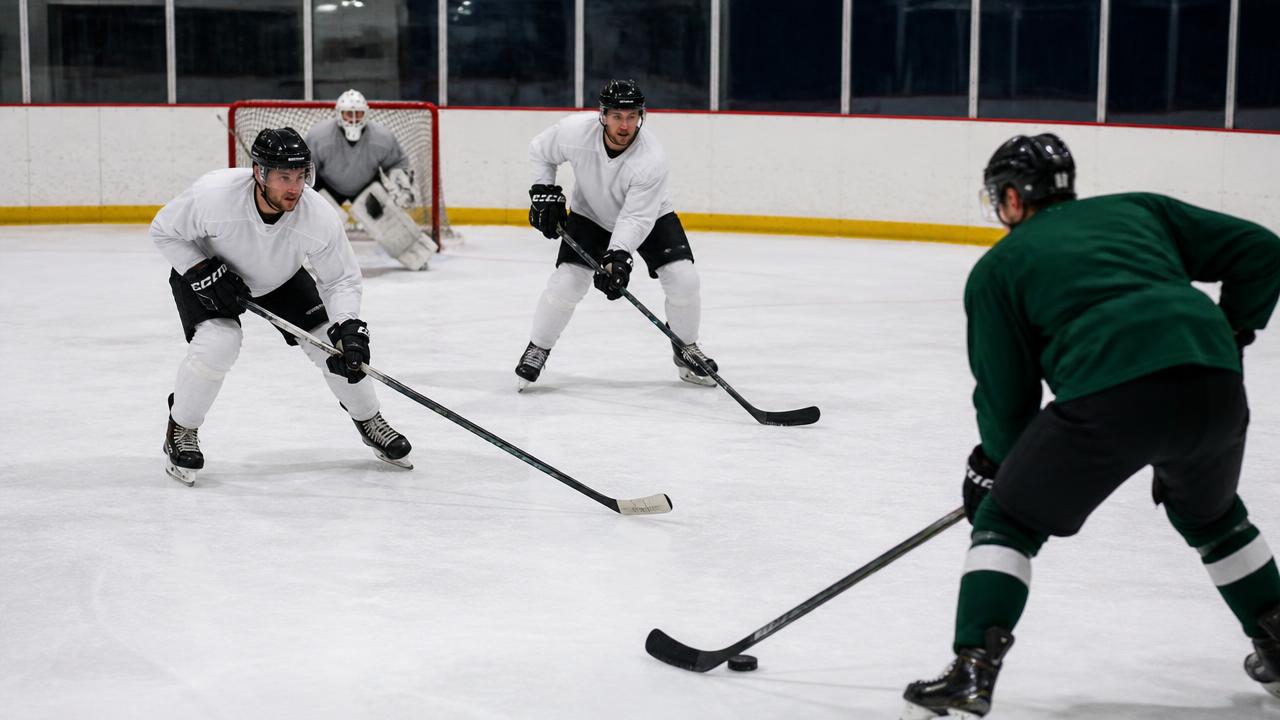
Shapes are only the opening move
A 1-2-2 or a 2-1-2 describes where three or four attackers position themselves as the puck is retrieved behind the opposing net, but the number is only the starting arrangement. What happens next — who pressures the puck carrier, who seals the strong side, who reads a pass and jumps the passing lane — is where the system actually lives, and it depends on the players reading each other rather than following a diagram.
That is why the same nominal system can look aggressive under one coaching staff and cautious under another. The label tells you the intended structure; it does not tell you the tolerance for risk that fills it in.
The trade every forecheck makes
Sending attackers deep to pressure the puck means fewer bodies available if the defending team breaks the pressure cleanly, which is why an aggressive forecheck occasionally concedes a rush the other way. Coaches accept that risk because the alternative — conceding the defensive zone breakout easily every time — is a slower, quieter way of losing the same battle.
A conservative forecheck reverses the trade: less chance of pressure winning the puck back high, less chance of being caught the other way. Neither choice is free, and a team's identity is often just which side of that trade it prefers to live on for sixty minutes.
Why the pressure pays off late
The first fifteen seconds of a forecheck rarely produce a turnover against a competent defence; what it produces is a rushed first pass, a puck carrier who has to make a decision half a second sooner than he wants to. Repeated over a shift, that acceleration compounds, and the mistake tends to arrive on the third or fourth retrieval rather than the first.
Watching a forecheck for the turnover it eventually forces misses the point. Watching it for how much earlier the defending team is forced to move the puck each time is the more useful habit, and it is visible without any data beyond your own eyes.