
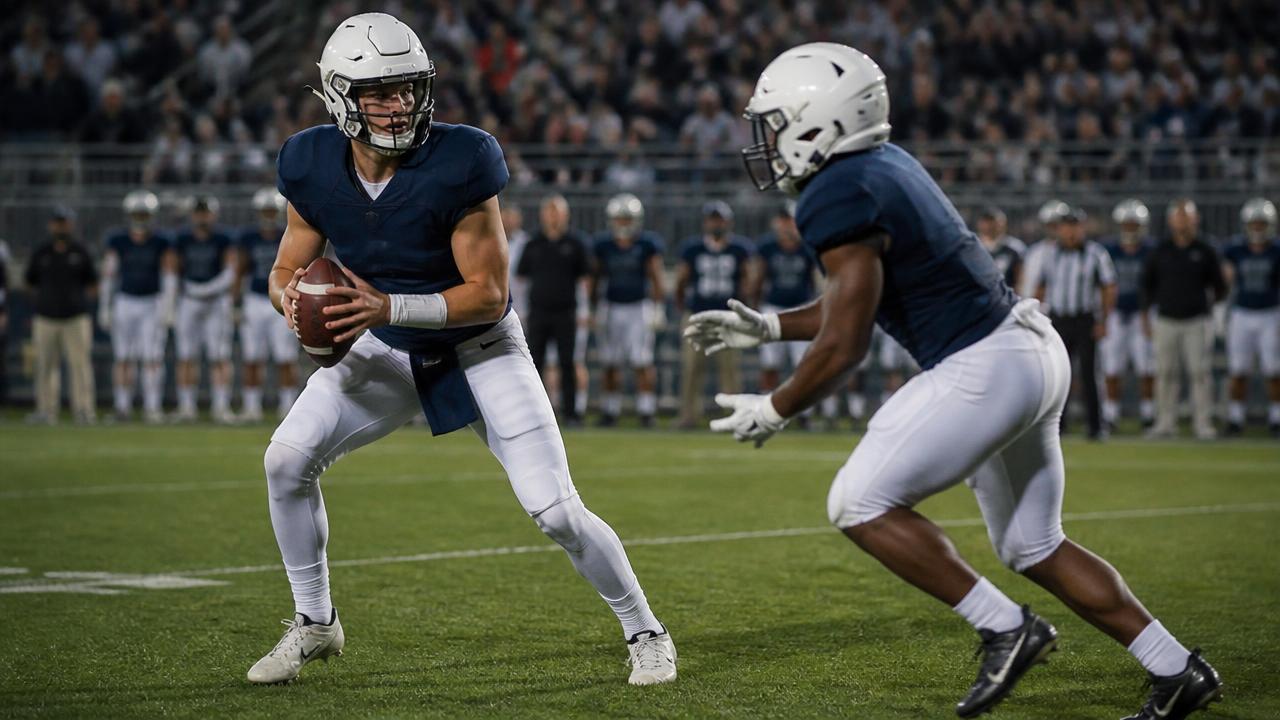
The fake is aimed inward
Play-action does not try to fool the defensive backs standing deep; it tries to fool the players closer to the line, whose job includes reading run keys quickly. A linebacker who steps forward half a beat to fill a gap that is not there has opened a throwing lane that did not exist a second earlier. That half-beat is the entire mechanism.
This is why play-action is drawn up around the same blocking schemes a team actually runs. The offensive line sells the run with real technique, not exaggerated theatre, because a defence that has faced the run all afternoon reacts on habit rather than on suspicion.
Credibility is the scarce resource
A play fake only taxes a defence that has been punished for ignoring the run. Teams that establish an effective ground game earn defenders who respect the fake even on passing downs, and that respect is worth more than any single called run play. It is a standing threat, cashed in occasionally.
The reverse is equally true. A team that cannot move the ball on the ground gets no benefit from the fake, because the defence has already learned it can play the pass regardless of what the backfield does. Play-action rates and running success are not two separate stories; they are the same story told from different angles.
Why it survives era after era
Passing philosophies have shifted repeatedly over the decades, yet play-action has never gone out of fashion, because the underlying exploit — defenders reading run keys under time pressure — is built into how the position is coached, not into any particular scheme. As long as linebackers and safeties are taught to attack downhill against the run, the fake will have something to work against.
Watching for it is simple once you know where to look: not at the quarterback's hands but at the second level of the defence, in the instant after the snap. Arena's NFL positions and statistics guides explain what those defenders are actually reading.